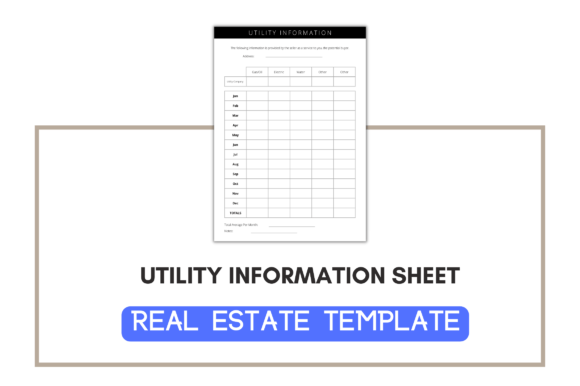
Editable Utility Information Sheet
As an embroidery designer and product reviewer, I often find myself evaluating digital designs for real-world use. The Editable Utility Information Sheet caught my attention because it promises to streamline the design process for a variety of projects. But does it deliver in practical situations? Let’s break it down.
First Impressions: A Template That Feels Purposeful
The Editable Utility Information Sheet has a clean, no-nonsense aesthetic. Its layout is straightforward, with clear sections that suggest organization and efficiency. The design doesn’t scream for attention—it quietly communicates that it’s meant to be used, not just admired. This makes it ideal for embroidery projects where clarity and functionality are key.
The visual personality of the template leans toward professionalism. It’s not overly decorative, which means it can fit into a wide range of branding styles. Whether you’re working on custom apparel or a handmade gift, this design feels like it belongs in a professional setting without being too rigid.
Real-World Use: From Tote Bags to Baby Items
I tested the Editable Utility Information Sheet on a few different projects, starting with a custom embroidered tote bag. The design worked well on a medium-sized hoop, and the stitch density was just right for the fabric I used. It didn’t overwhelm the material, and the details remained sharp after stitching.
When I tried it on a baby onesie, the design maintained its integrity. The font size was appropriate, and the spacing between elements allowed for easy reading. For a personalized gift, that’s essential. Parents want to know what they’re getting, and this design delivers that information clearly.
Another test involved a sweatshirt. The design looked good on a light-colored fabric, but I noticed that on darker backgrounds, the thread color needed to be adjusted for better visibility. This is something to keep in mind if you plan to use the design on a variety of garments.
Where to Be Cautious: Fabric and Design Limitations
While the Editable Utility Information Sheet is versatile, there are some limitations. On thin or stretchy fabrics, the design might not hold up as well. I found that using a proper stabilizer helped, but even then, some areas were slightly distorted. If you're working with delicate materials, this design may require extra care.
Small hoop sizes can also be an issue. The design isn’t overly complex, but certain areas—like the corners and detailed sections—may need a larger hoop to maintain accuracy. If you're limited by your machine's capabilities, this could be a challenge.
For curved surfaces like caps or hats, the design works, but you’ll need to adjust the placement carefully. The design doesn’t have built-in curves, so you’ll have to manually position it to fit the shape of the garment. This adds an extra step, but it’s manageable.
Impact on Visual Appeal and Customer Perception
The Editable Utility Information Sheet contributes positively to the visual appeal of a finished product. It’s clean, easy to read, and doesn’t distract from the main embroidery design. For a handmade product or a personalized gift, this kind of clarity is important. Customers appreciate knowing exactly what they’re purchasing, especially when it comes to custom items.
From a commercial perspective, this design helps build trust. When clients see a well-organized utility sheet, they feel more confident about the quality of the work. It also supports brand consistency, especially if you're running a craft business or selling on Etsy. A professional-looking design reflects well on your overall brand image.
Practical Designer Notes: Test Before You Sell
Before finalizing any project, I always recommend testing the Editable Utility Information Sheet on scrap fabric. This helps you understand how the design will look once stitched. It also allows you to check for any issues with thread color contrast or stitch density.
Reviewing the design in black and white mockups is another smart move. This helps you see how it will appear on different fabric colors. If you're planning to use it on both light and dark backgrounds, make sure the design is adaptable.
Also, confirm whether the design works for both personal and commercial projects. Some templates have restrictions, so it's important to double-check the licensing terms before selling finished items or digital products.
Final Thoughts: A Useful Tool for the Right Projects
The Editable Utility Information Sheet is a solid choice for embroidery designers, small business owners, and crafters looking for a reliable template. It’s practical, easy to edit, and fits well into a variety of projects—from custom apparel to personalized gifts.
While it’s not perfect for every situation, it excels in environments where clarity and organization are important. If you're looking for a design that enhances your workflow without adding unnecessary complexity, this one is worth considering.